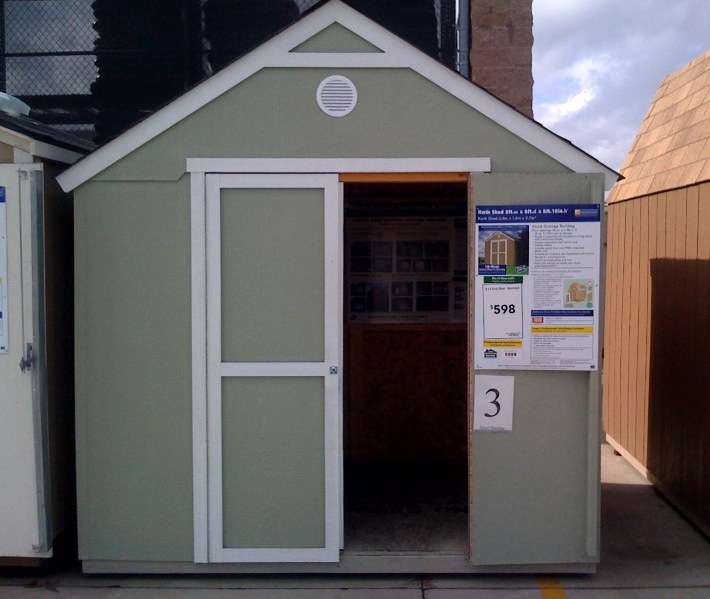
Journal: November 5th, 2009

I’m sitting in my hut as I type this. It’s the first time I’ve spent time in the hut while not working on it. Outside, it’s raining. With the clouds obscuring the normally starry skies, it’s eerily dark. I’ve never seen it so dark out here. Even when the moon isn’t out, I can normally clearly see the outline of the trees, and move around, albeit with some difficulty. Right now, it’s just swirling darkness.

But inside the hut, it’s quite nice. I have music playing on my laptop, and have been nursing a hot mocha that’s now two-thirds empty and luke warm. I am completely shut off from the outside world, except for the when the tarp covering my roof rattles, and I know a gust of wind just blew by. It’s kind of ironic. I bought 60 acres of land far away from the cities and suburbs, yet right now, I could just as well be in someone’s shed in a backyard in Sunnyvale.

Progress on the hut has been slow. I didn’t get here until well after dark on Tuesday. Yesterday (Wednesday), I spent the better part of the morning putting up siding on two small squares. It took a while because I’m out of nice big boards of plywood, and have resorted to cutting up scraps. One section I did measures about 29 inches by 35 inches or so, and is comprised by no fewer than 3 pieces of plywood, one of which is maybe 6 inches by 10 inches.

I lost nearly a couple of hours bringing up gear from my car. When I’m here for a short stay, I usually leave my cooler and freezer behind, and hike in with nothing more than a backpack. But for these longer stays, I have to bring civilization with me. The freezer, cooler, 12 Volt deep cycle battery, battery charger… Now that my generator’s fixed, I can leave the battery here.

Later in the afternoon, I finally got around to working on the door. I’ve been putting it off mentally because doors are hard. Nothing in my hut is square or parallel or perpendicular as they should be. But, for the most part, it’s not a huge issue. With doors, precision matters. If the hinges aren’t alined, the door might not shut, or it might put unnecessary strain on the hinges or other parts. There’s also the inherent challenge in securing something that’s inherently mobile. What order do I do things in? Do I build a door, attach the hinges to the door, then the door+hinges to the frame? Or do I first attach the hinges to the frame, then attach the door to the hinges? At the end, I opted for a hybrid approach. I first built the skeleton of the door itself (really, it’s a frame, but I’ll call it a “skeleton” to disambiguate it from the doorframe). Then, I screwed on the hinges to the doorframe, then measured the precise location the corresponding screws would need to go on the door skeleton, and pre-drilled holes. Then, I attached the door skeleton to the hinges already attached to the doorframe. The task was made easier by the fact that the door skeleton, without its plywood skin, was light enough to handle. Had I built the entire door first, it would’ve been too unwieldy attach to the doorframe with any precision, since the screws are accessible only when the door is in the open position and thus swinging unsupported. I am pleased to say that my approach worked. The door swings freely, and is square and parallel to the hut, as far as I can tell. This morning, I attached pieces of plywood (again, cut from scraps) to the door skeleton. It’s bigger than the skeleton so that it sort of seals the gaps. It’s not the prettiest door, nor is it anywhere air tight, but it’s certainly a huge improvement over the big gaping opening I had before.

I spent all of the afternoon putting up plywood to cover the gables. Since I stupidly neglected to borrow Keith’s ladder, I had to start by building scaffolding. A couple of two-by-fours screwed on/in to the hut, such that a couple of feet stuck out to support a platform was all that was needed. But because I needed all the two-by-fours for the scaffolding, I couldn’t use one to finish a 16″-wide section of the wall next to the door. Right now, I have some roofing tar paper covering that space to help block the wind, but it’s a poor substitute for a proper wall. In any case, I’m almost done with the gables. I just have a small triangular section open on the South side gable. Once that’s patched, I’ll be able to use a two-by-four to finish that last bit of wall, and my hut will be fully enclosed. Well, excepting the many gaps, big and small, that is.

I’m a little concerned about the weather. I need to paint the exterior before it gets much wetter, but I can’t paint if it’s going to rain before the paint dries. I don’t have access to weather forecasts, but it’s sprinkling now, and I’m not sure when the next dry spell is coming. I might have to weatherproof by putting up tar paper, or the cheap plywood I’m using for my exterior siding could deteriorate rather rapidly.

With the exterior hull of my hut nearing completion, I’m starting to turn my attention to finer details. For instance, where do I want to put my cot? I’d originally planned on building a wide but short cot oriented along the short side (North-South) of the hut, maybe 20 inches off the floor. But, I was just surveying the interior, and realized that it might make sense to build the cot higher up, loft-style. Heat rises, so higher up I am, the warmer I should be. Also, CO2 sinks, so in the unlikely event that I actually manage to seal my hut, I’ll be less likely to suffocate. The problem is, if I want to build a loft, it makes more sense to build it along the longer side, specifically on the Southern side, where there are no windows. On the other hand, if the cot is oriented along the long side, it juts out into the short orientation, leaving less space. I might opt to build a narrow cot along the long side. I wanted a wider cot in case a girlfriend came to visit, but in that case, we can both sleep on the floor; having another heat source should compensate for the slightly cooler temperature. Besides, it’s kind of silly to design a hermit hut with the assumption that anyone would come visit.

Hut Raising

As it turns out, building a hut, even a small one, is pretty hard… especially if you’ve never built an enclosed structure of any kind before, and you just sort of sketch together a design using Google SketchUp and your imagination and no other reference, then decide to improvise the rest as you go. But it’s also a ton of fun, and I’m sure my helpers for the weekend, Keith and Josh, would attest to this fact.

We all met up in Chico on Friday night, then spent most of Saturday buying supplies and figuring out logistics. After making a brief stop at Keith’s parents’ house to talk to his dad (an actual engineer) about the rough design I had, we headed over to Lowes to pick up supplies. Based on my rough design, I’d estimated that we’d need something like four 2x6s, at least a couple dozen 2x4s, and twelve sheets of 4 foot by 8 foot plywood boards. Since we weren’t sure how much would fit in each car, we initially bought all the 2x4s and 2x6s, somehow fit them all into Josh’s Prius, then bought six sheets of OSB and six sheets of cheap pine plywood, all cut in half so that they’d fit in Keith’s SUV. In addition, we bought paint, painting supplies, several tubes of caulk, cement blocks, nails, and a roll of asphalt roofing material, at a total cost of around $304.

The two cars heavily laden with lumber, we returned to Keith’s place to chop as much of the 2x4s as possible into their final dimensions using the miter saw I’d brought up from storage in Mountain View the previous day. We then loaded all the lumber back into Josh’s car, packed up our gear, and headed out.

It was dark by the time we got to Serenity Valley, and slowly made our way up the dirt road. Josh left the Prius by the paved road, and we walked ahead of Keith in his SUV, the dark woods ahead of us pierced by the stark light from the car’s headlamps. Fortunately, the dirt road didn’t prove to be too much of an obstacle for the truck, even in the darkness. Before long, we were by my campsite, sitting by a roaring fire, with cups of hot chocolate in our hands. Despite the frosty cold, we spent the hours away staring into the fire, wandering away into the darkness only to gather more fuel. It wasn’t until close to 1am that Josh agreed to stop adding more wood to the fire, and with the flames dying down and the cold setting in, we retreated into our respective tents for the night.

On Sunday morning, after filling our bellies with hot oat meal, scrambled eggs, and bacon, we started off the day by moving my camp another 30 or so yards West. Unlike my previous solo-trailer-moving adventures, with a little huffing and puffing, the three of us managed to push and pull the trailer into place with out any mechanical assistance. And with that task completed, we moved on to our primary task: hut buildin’.

I don’t know much about construction, but I know you generally build from the bottom up. So that’s what we did. Sort of. Normally, you’d start with a foundation. Except, in my case, since the hut is so small, I decided to build the floor first, then plop that onto cinderblocks instead of putting down an actual foundation. The floor is basically a 2×6 frame, with 2x4s and 2x2s supporting sheets of OSB on top, and mylar emergency blankets sandwiched between for insulation and weather proofing.

With the floor completed, we assembled a couple of wall panel frames, and put together the rafters. The rafters are my original design, and somewhat unique. Since I’ve never built a roof before, I tried to optimize for ease of assembly, and for the most part, I think I succeeded.

We ended the first day of construction by taking a hike through my property to my supply cache on the northern end, to pick up some spare lumber. By the time we got back to camp, light was fading fast, so we cooked up some rice and chili for dinner, and shortly after that, Josh headed out on his long drive back to San Jose.

With Josh gone, it was just Keith and I the second day, working on perhaps the most challenging part of the whole project: the roof. We spent most of the morning putting up the 3rd set of rafters in the middle, and reinforcing them all until we were satisfied with their strength and rigidity. The ultimate test was for the two of us to climb onto the frame of the hut, and hang from the rafters, to make sure nothing moved. Satisfied, we then moved onto the difficult task of putting up roof boards. Unsurprisingly, things didn’t seem to line up quite right, and our work was further hindered by the fact that we were working 7 or 8 feet off the ground, with one not-quite-tall-enough ladder between the two of us. But we managed, and by the time we wrapped up around 3pm, we had the entire roof covered, with all the seams mostly sealed. Unfortunately, we didn’t get around to putting on the waterproof roofing material, but that will have to wait for another time.

There’s still more work to be done, but I’m very pleased with the progress and quality of the work so far. And when I say I’m pleased with the “quality” of the work, what I really mean is that I’m happy there’s a structure that probably won’t collapse. That doesn’t mean the walls are straight or square, or that there aren’t big gaps everywhere, or that the whole thing is even on level ground. But for three first timers, I think we’ve done well. Now I just need to go back and finish putting up the siding, paint it all before moisture seeps into the plywood, and put on the roofing before the wet season starts in earnest…

(Also, see more photos from the build. I also shot hours of video, but it’ll probably be a while before I get around to editing it…)

The sub-$300 Hut Project

hut

I’ve been hinting at how my Serenity Valley adventures may be coming to a close very soon, at least for this year. There are a couple of reasons. The first reason is financial: I’ve burned through most of my cash, and I’ll need to either start making more, or start liquidating non-cash financial assets1. The second reason is more complicated, but mostly comes down to the fact that, as the days become shorter and the nights colder, I’m spending more and more time crammed in a tiny backpacking tent. This is so detrimental to my quality of life, that at some point, it simply won’t be worth being out there (since I’m doing this for fun).

So, I have two options. I can either come down from the woods, or I can stay in the woods a little longer, but not in my tiny tent. I’ve thought about these two choices, and decided I want to try the latter, before I inevitably resort to the former.

I then thought about what exactly it was that I didn’t like about being in a tiny tent. First of all, of course, there’s the fact that the tent is tiny (about 3ft by 6ft). Specifically, there’s only enough space to sleep in, and I can’t even stand up. The other problem is that the tent doesn’t offer much insulation, so once I get into my sleeping bag for the night, I’m not coming out until late-morning; not even if I need to pee really badly.

To make life out there more comfortable, I need shelter that has enough room for a cot and additional living space, with ceilings high enough such that I could stand up straight. It needs to have good insulation, ventilation to allow the use of open flames inside, and also windows to let light in. It needs to be easy enough to build (say five Ryo-days), using materials that I can haul onto my property myself. It should be capable of withstanding the elements, and remain inhabitable for at least two years. And it has to cost less than $300.

I am currently considering competing designs: a Hexayurt, or a more traditional timber frame and plywood construction. I saw a lot of Hexayurts at Burning Man, and can see their draw for that specific event, but I’m not sure they’re suitable as longer-term permanent structures in colder climates. A timber frame structure, on the other hand, is a lot more complicated to build, and potentially more expensive as well as susceptible to termites. Right now, I’m leaning more towards timber frame, but stay tuned…